


Hon. Shri. Devendra Fadnavis
Hon'ble Chief Minister, Maharashtra State

Hon. Shri. Eknath Shinde
Hon'ble Deputy Chief Minister, Maharashtra State

Hon. Smt. Sunetra Ajit Pawar
Hon'ble Deputy Chief Minister, Maharashtra State

Hon. Shri. Dr. Ashok Wooike
Hon'ble Minister, Tribal Development Department

Hon. Shri. Indranil Naik
Hon'ble Minister of State, Tribal Development Department

Hon. Shri. Vijay Waghmare I.A.S.
Hon'ble Secretary, Tribal Development Department

Hon. Smt. Manjiree Manolkar, I.A.S.
Hon'ble Commissioner, Tribal Research and Training Institute, Pune

Hon. Smt. Chanchal Patil
Hon'ble Joint Director, Tribal Research and Training Institute, Pune
 Aadi-Vikas By TRTI
ESTD. 1975–1976 · AADI-VIKAS SCHEMES (TCS)
Aadi-VikasSchemes
A flagship tribal development initiative ensuring inclusive, sustainable, and equitable growth — addressing social, economic, and cultural needs while preserving identity, traditions, and indigenous knowledge systems.
in India
Tribal Share
Tribes
Offices

Inclusive Growth
for Every
Community
India is home to approximately 1.4 billion people, of which nearly 10.4 crore (8.6%) belong to Scheduled Tribes. In Maharashtra, tribal communities constitute around 9–9.35% of the population, primarily residing in forested, hilly, and rural regions where access to infrastructure, education, healthcare, and livelihood opportunities remains limited. Aadi-Vikas bridges this gap through targeted, community-centred interventions.
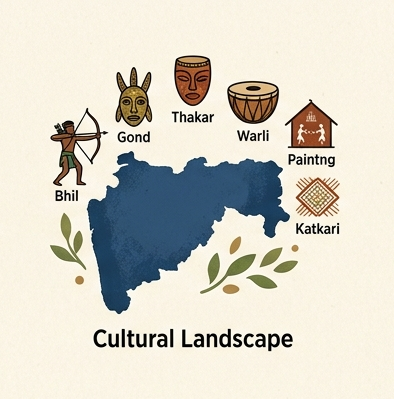
Maharashtra's Cultural Mosaic
47 recognized Scheduled Tribes — each with its own language, customs, and deep relationship with nature and the forests of Maharashtra.
Major Tribal Communities
Maharashtra's tribal communities are organized into core tribes, major group clusters, and sub-groups — each with distinct cultural identity. Hover a group to learn more, or click to toggle the tribe list on the right.
Art & Identity
From Warli paintings to Gond folk art — each tribe's creative expression carries centuries of ecological and cultural wisdom.
Read more →Regional Hubs & Tribal Belts
Predominantly forest-covered and geographically remote belts requiring focused, intensive development interventions.



Sahyadri Region
The Sahyadri Region stretches across the Western Ghats — home to some of the highest concentrations of tribal populations in Maharashtra. Communities are settled amidst rugged hills, dense forests, and scattered hamlets. The terrain sustains a deeply rooted cultural and ecological lifestyle — agriculture adapted to slopes, strong dependence on forest resources, and close-knit community living in padas.



Gondwana Region
The Gondwana Region covers Gadchiroli, Chandrapur, and Gondia — forming a vast stretch of dense forests and mineral-rich land. One of the most remote and underserved tribal belts in the state. Communities depend heavily on the forest for livelihood — collecting bamboo, tendu leaves, and honey. The region holds immense cultural and ecological value, with tribal communities maintaining strong traditions, forest knowledge, and sustainable living practices.
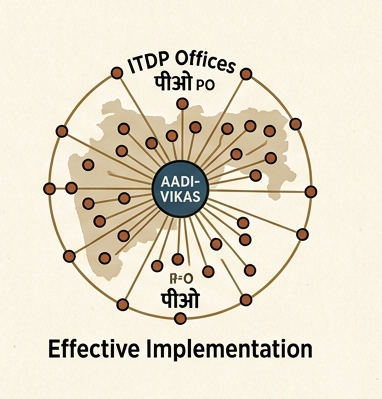
ITDP Offices Across Maharashtra
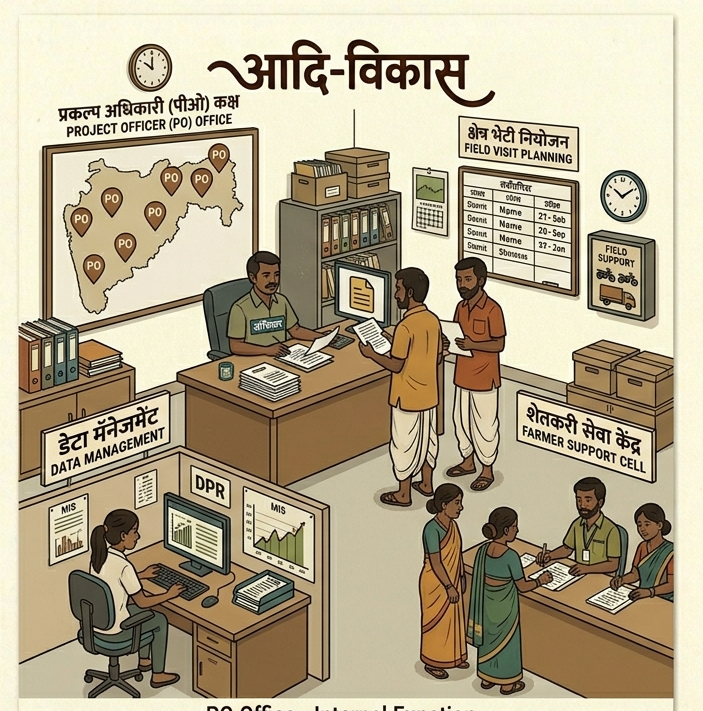
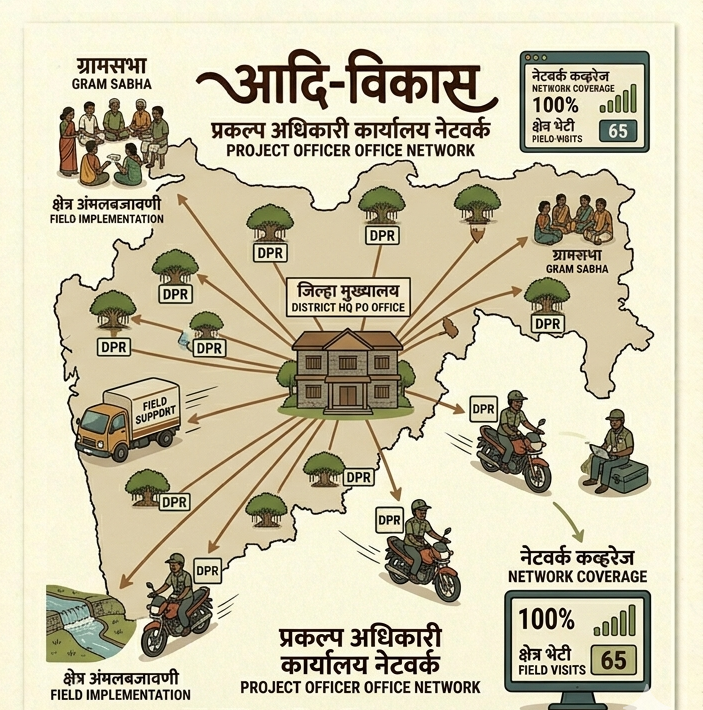
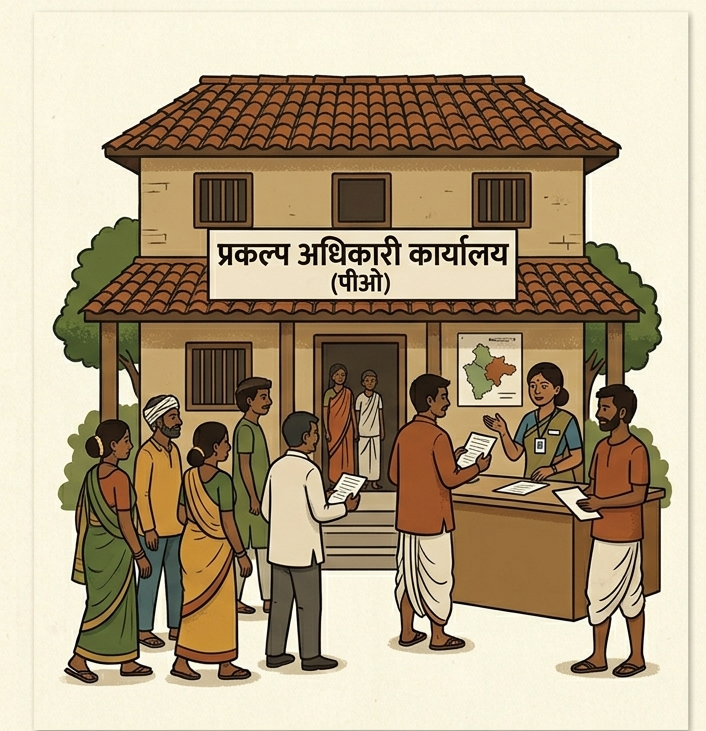
30 Integrated Tribal Development Project offices function as the primary administrative units responsible for planning, implementing, and monitoring tribal welfare initiatives — acting as a crucial bridge between government schemes and tribal communities in remote and underserved regions.
⚙️ Role & Responsibilities
ITDP offices are responsible for end-to-end execution of tribal development programs — from planning to monitoring. Each office is strategically located in tribal-dominated areas, ensuring localized, accessible, and need-based development.
Planning & Implementation
Development initiatives are carefully designed based on the unique socio-economic conditions, cultural practices, and geographical challenges of tribal regions.
Detailed surveys, field studies, and community consultations help identify actual needs, ensuring inclusive and sustainable growth for even the most remote populations.
Service Delivery Coordination
Effective coordination ensures delivery of essential services such as healthcare, education, nutrition, and housing.
Government schemes are streamlined efficiently, removing accessibility barriers and ensuring timely and transparent benefits.
Livelihood Support
Focused efforts enhance livelihood opportunities through skill development, vocational training, and self-employment initiatives.
Financial assistance, market linkages, and capacity-building programs empower communities towards economic self-reliance.
Monitoring & Evaluation
Regular monitoring and evaluation track the progress and effectiveness of schemes through data-driven assessments and field inspections.
This ensures transparency, accountability, and optimal utilization of resources for maximum impact.
All 30 ITDP offices across Maharashtra's tribal belts — highlighted offices are highly sensitive zones. Hover for details.
11 offices classified as highly sensitive — requiring focused interventions, stronger monitoring, and adaptive last-mile delivery strategies.
🔴 Nashik
High tribal density with remote pockets in the Sahyadri belt.
🔴 Kalwan
Interior villages with limited road connectivity, forest-dependent population.
🔴 Taloda
Nandurbar — serving remote Bhil communities in the northern belt.
🔴 Kinwat
Nanded district border — sparse infrastructure and limited services.
🔴 Dharni
Remote Korku communities in the Melghat forest, Amravati district.
🔴 Pandharkawada
Yavatmal — serves Kolam PVTG communities with intensive support.
🔴 Aheri
Deep Gadchiroli interior — serves Gond communities in remote areas.
🔴 Bhamragad
One of the most remote ITDP zones — Madia Gond PVTG community area.
🔴 Gadchiroli
Gondwana belt headquarters — critical hub for eastern tribal development.
🔴 Etapalli
Extremely remote forest zone — limited digital access and essential services.
🔴 Rajura
Border zone with high socio-economic vulnerability and infrastructure deficit.
⚠️ These zones demand focused interventions, stronger monitoring, and adaptive strategies to ensure benefits reach the last mile.
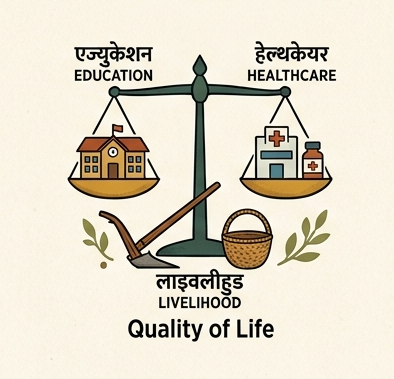
A Holistic Approach to Quality of Life
Healthcare Access
Strengthening healthcare infrastructure in the most remote tribal areas, reducing preventable illness and improving maternal and child health outcomes.
Education & Literacy
Promoting education through dedicated schools, hostels, scholarships, and targeted initiatives to reduce dropout rates among tribal children.
Skill Development
Providing vocational training and employment-oriented skills while building on the traditional knowledge and craftsmanship of tribal youth.
Sustainable Livelihoods
Supporting agriculture, forest-based livelihoods, and self-employment that respects ecological balance and delivers long-term stability.
Strategic Initiatives & Programmes
Five flagship schemes driving tribal welfare — click each to explore full details.
Nucleus Budget Scheme
Direct financial assistance up to ₹50,000 for self-employment ventures.
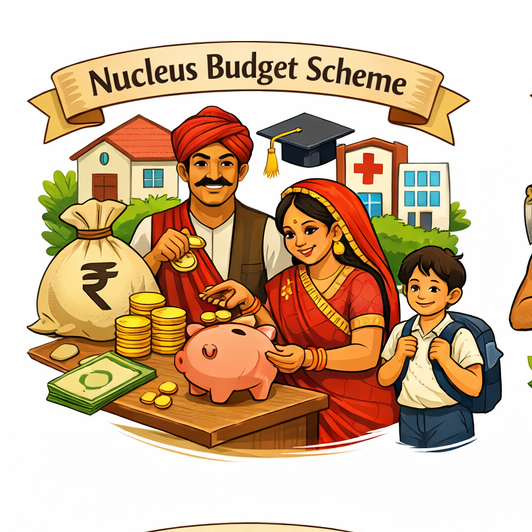
Provides direct financial assistance up to ₹50,000 to individuals or small groups from tribal communities to support self-employment and income-generating activities.
- Livestock rearing 🐐 and animal husbandry
- Small retail shops and local businesses 🏪
- Agriculture-based activities 🌾
- Traditional crafts — preserving cultural skills
- Reduces dependency on daily wage labor
Thakkar Bappa Programme
Infrastructure development in remote tribal hamlets.
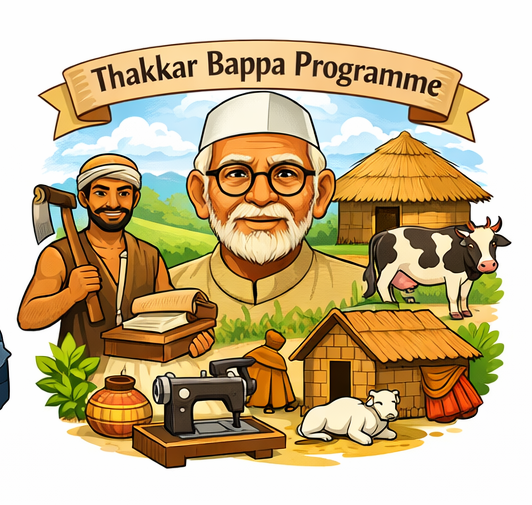
Focuses on infrastructure development in remote tribal hamlets — bridging the accessibility gap by connecting isolated communities.
- 🛣️ Road connectivity to interior villages
- 🏠 Housing improvements for tribal families
- 💧 Safe drinking water supply systems
- ⚡ Basic civic infrastructure and sanitation
DAJGUA Mission
Comprehensive development covering over 63,000 villages.
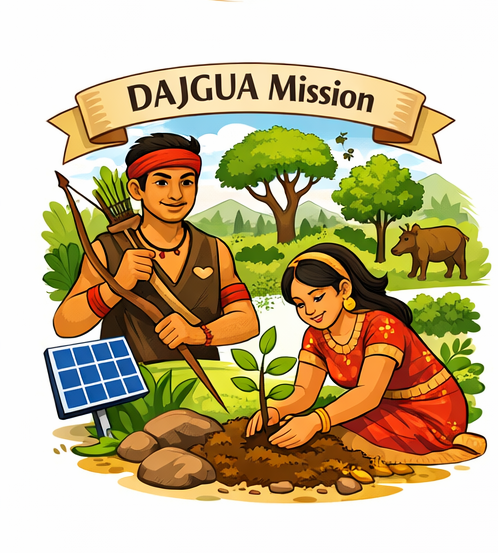
A comprehensive, multi-departmental initiative covering over 63,000 villages — delivering integrated government services directly to tribal communities at their doorstep.
- 🏥 Healthcare and nutrition services
- 🎓 Education and school enrollment drives
- 📄 Documentation and identity services
- 💼 Livelihood and welfare scheme access
PM-JANMAN
Focused national support for Particularly Vulnerable Tribal Groups.
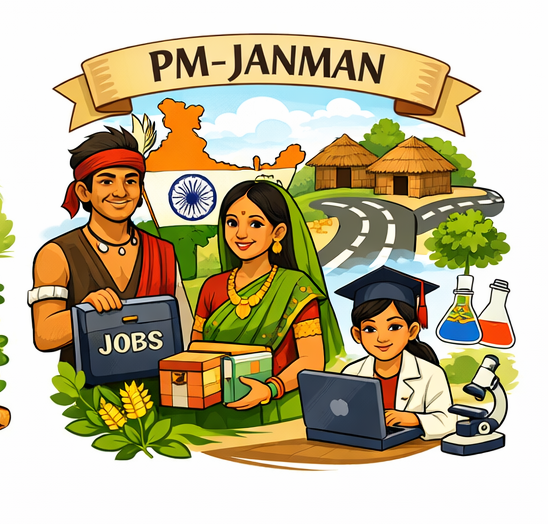
Pradhan Mantri Janjati Adivasi Nyaya Maha Abhiyan — a national-level initiative focused on Particularly Vulnerable Tribal Groups (PVTGs). Core vision: no tribal community is left behind.
- 🏠 Housing for PVTG families
- 🏥 Priority healthcare access in remote areas
- 🎓 Education facilities in PVTG settlements
- 🍲 Targeted nutrition support programs
- 🛣️ Basic infrastructure in most isolated villages
DAPST
Dedicated budget allocation ensuring transparent tribal funding.
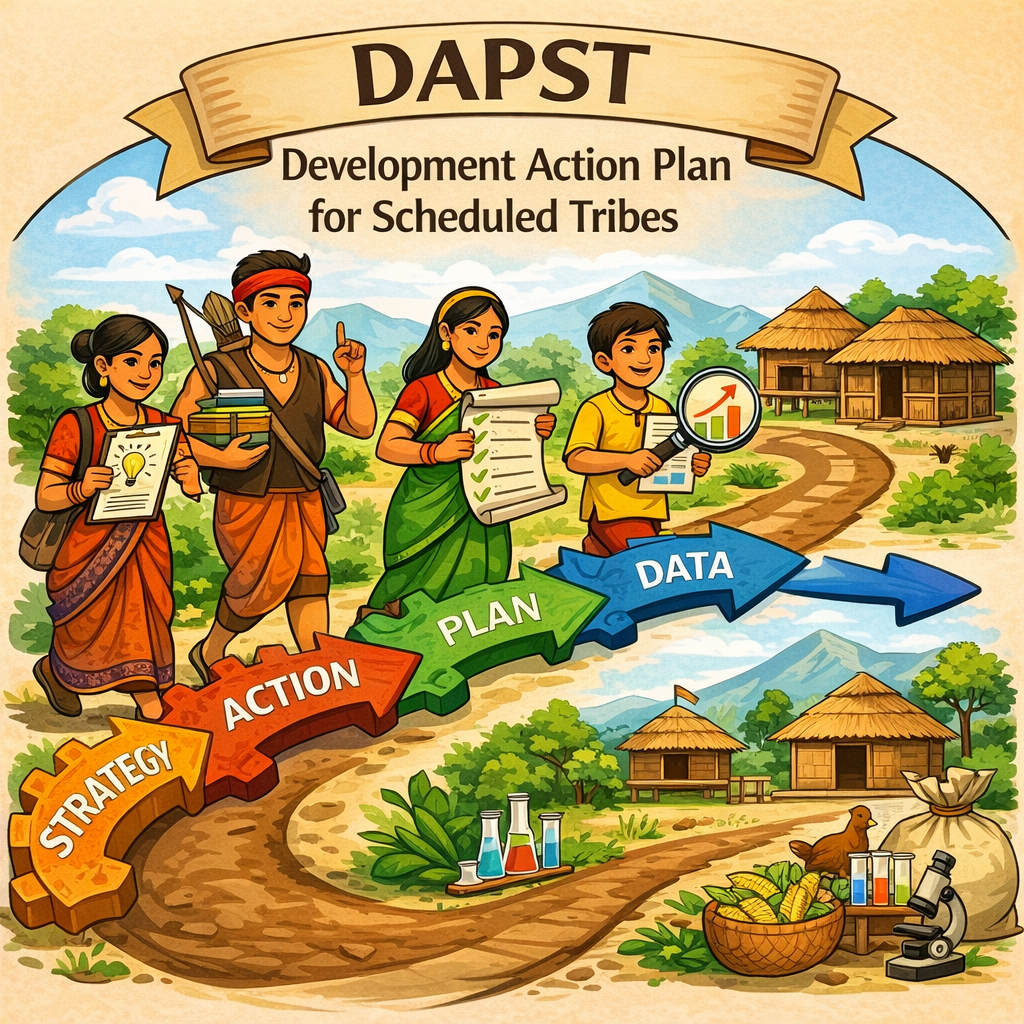
A dedicated budgetary framework — an umbrella funding mechanism ensuring a specific portion of government funds is allocated exclusively for tribal development.
- 🎓 Education: ashram schools, scholarships
- 🏥 Healthcare services and facilities
- 💼 Skill development and employment programs
- 🌾 Agriculture and livelihood support
- 🏗️ Infrastructure development planning
Empowering Through Self-Governance
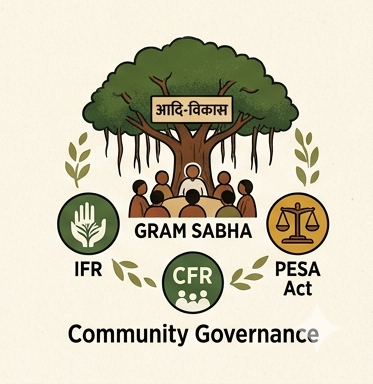
Pillars ensuring community participation, self-governance, and protection of tribal rights. Click any card to explore more.
Individual Forest Rights
Legal ownership for tribal families over traditionally cultivated forest land.
Community Forest Rights
Communities collectively manage and protect traditional forest territories.
PESA Act
Panchayat Extension to Scheduled Areas — tribal self-governance and autonomy.
Gram Sabha
Village councils as primary decision-makers for local development.
Hamari Gaon Sanstha
Community ownership initiative fostering tribal pride and participation.
🌳 Individual Forest Rights (IFR)
IFR recognizes the legal ownership of forest land for tribal families who have been traditionally cultivating or residing on it for generations — about dignity, identity, and stability.
- Families receive formal land titles (pattas) 📄
- Rights granted for self-cultivation and habitation
- Security against displacement from ancestral land
- Enables families to invest in agriculture 🌾
- Easier access to government schemes with documented rights
🌿 Community Forest Rights (CFR)
CFR extends beyond individuals to recognize the collective rights of entire villages over forest resources. Conservation and livelihood go hand in hand — guided by traditional ecological knowledge.
- 🌳 Manage and protect forests collectively
- 🍃 Collect and use forest produce (bamboo, honey, tendu leaves)
- 🛑 Prevent exploitation by external entities
- Promotes sustainable forest management practices
⚖️ PESA Act — Panchayats (Extension to Scheduled Areas)
The PESA Act empowers tribal communities in Scheduled Areas with self-governance and decision-making authority — shifting governance from top-down to community-driven.
- 🏘️ Local communities control local resources
- 🧾 Gram Sabhas must be consulted for development projects
- 🚫 Land acquisition cannot happen without community consent
- Protects tribal land and resources from outside acquisition
🏘️ Gram Sabha
The Gram Sabha is the foundation of local governance in tribal areas — a village assembly where all adult members participate in consensus-based decision making.
- 📊 Approves and monitors development plans
- 🌿 Manages natural resources collectively
- 🧾 Verifies beneficiaries for government schemes
- ⚖️ Resolves local issues at the village level
🤝 Hamari Gaon Sanstha
A community-driven initiative that promotes ownership, participation, and local leadership in village development. Development should not be imposed — it should be owned by the people.
- 🤝 Active community participation in all decisions
- 🌱 Building local leadership and accountability
- 🏘️ Villages plan and manage their own development path
- Bridges gap between government schemes and community reality
"A future where modern progress integrates with traditional values."
Aadi-Vikas envisions tribal communities living with dignity, equality, and opportunity while preserving their cultural identity — a balanced development model ensuring sustainability and long-term empowerment for every community across Maharashtra.